

Where to Stay in Las Vegas: Best Areas for Every Type of Trip (2026)
Where should you stay in Las Vegas? Compare Center Strip, South Strip, North Strip, Downtown, Summerlin, Chinatown and off-Strip areas by trip style, convenience and transportation.
Updated for 2026. The best place to stay in Las Vegas depends less on finding one “best hotel” and more on choosing the part of the city that matches the trip you actually want. A first-time visitor who wants classic Vegas, a couple planning dinners and shows, a family with kids, and a sports fan going to Allegiant Stadium all benefit from different bases.
If this is your first trip, start with our First Time in Las Vegas guide. Then use this guide to choose the area that will save you the most time, walking and rideshare money once you arrive.
Quick answer: where should you stay in Las Vegas?
| Trip style | Best area to start | Why |
|---|---|---|
| First Vegas trip | Center Strip | Maximum access to iconic resorts, restaurants, shows and attractions. |
| Couples / special occasion | Center or North Strip | Strong luxury dining, nightlife and resort experiences. |
| Families | South Strip or quieter off-Strip resort | Easier access to family attractions and less pressure to build every day around nightlife. |
| Nightlife trip | Center or North Strip | Closer to major clubs, lounges and late-night activity. |
| Sports / Allegiant Stadium | South Strip | Best positioning for stadium events and nearby pregame dining. |
| Sphere trip | North / north-center Strip | Most convenient for Sphere, Venetian/Palazzo, Wynn and nearby dining. |
| Budget-conscious | Downtown or selected off-Strip properties | Often a better starting point for value than prime Strip real estate. |
| Old-school Vegas / casino hopping | Downtown | Compact, energetic and easy to explore around Fremont Street. |
| Food-first trip | Center Strip, Chinatown or Spring Valley | Choose between resort dining convenience and deeper off-Strip variety. |
1. Center Strip: best for most first-time visitors
For many first-time visitors, Center Strip is the easiest default. You are surrounded by major resorts, restaurants, shopping, shows and attractions, which makes it easier to build a day without repeatedly crossing town. That matters more than it sounds: Vegas blocks are long, resorts are huge, and a place that looks “next door” on a map can still require significant walking.
Center Strip is especially useful if your itinerary includes Bellagio, Caesars Palace, Paris, The LINQ, Flamingo, Horseshoe, The Cosmopolitan or nearby attractions. You also have access to several Las Vegas Monorail stations on the east side of the Strip. The official Monorail route runs from MGM Grand to SAHARA with seven stations, making it useful when your plans line up with the route.

Best for: first-timers, short trips, couples, restaurant-heavy trips and visitors who want classic Vegas close at hand.
Before booking, read our complete Las Vegas Strip guide and our comparison of the Strip vs Downtown.
2. South Strip: best for Allegiant Stadium and arena-heavy trips
South Strip makes sense when your trip is anchored around Allegiant Stadium, T-Mobile Arena, Mandalay Bay, Luxor, Excalibur, New York-New York, Park MGM or MGM Grand. It is also a practical choice for travelers who want the Strip experience without needing to be in the absolute center every night.
If you are coming for a Raiders game, major concert or stadium event, location can be more valuable than chasing a small nightly hotel-price difference. Staying closer can simplify pre-event meals, reduce rideshare pressure and make it easier to return to your hotel after a crowded event.

For game or concert planning, see our guides to restaurants near Allegiant Stadium and restaurants near T-Mobile Arena.
3. North Strip: best for Sphere, Venetian, Wynn and newer luxury stays
The north and north-center Strip have become much more compelling for travelers whose itinerary centers on Sphere, The Venetian and Palazzo, Wynn and Encore, Resorts World, Fontainebleau or the Las Vegas Convention Center area.
If Sphere is the main event of your trip, staying nearby can make the whole evening easier. You can build dinner, the show and post-show drinks into one geographic cluster instead of treating Sphere as a standalone destination that requires extra transportation.
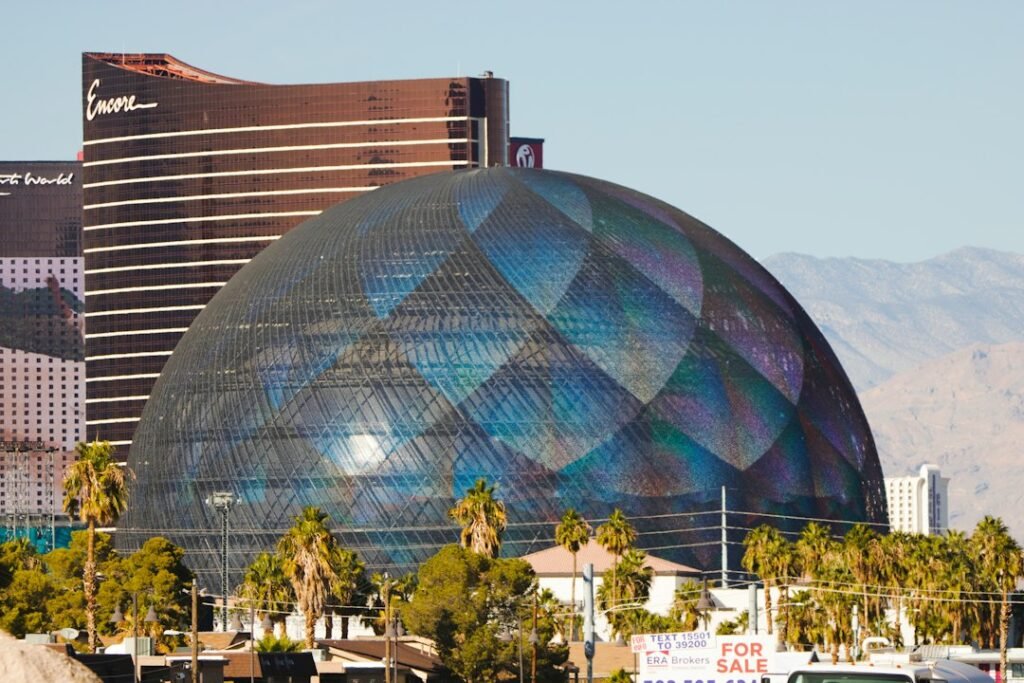
Start with our restaurants near Sphere guide if you are building a show-night plan.
4. Downtown Las Vegas: best for Fremont Street, compact nightlife and old-school Vegas
Downtown is a different experience from the Strip. Fremont Street Experience, Fremont East and nearby attractions create a more compact core where casino hopping, bars, restaurants and live entertainment can fit into a smaller footprint.
It is a strong choice if your idea of Vegas is neon, history, live music, smaller casinos and being able to move between several venues without spending as much time walking through giant resort complexes. Downtown can also work well for travelers who plan to spend meaningful time in the Arts District.
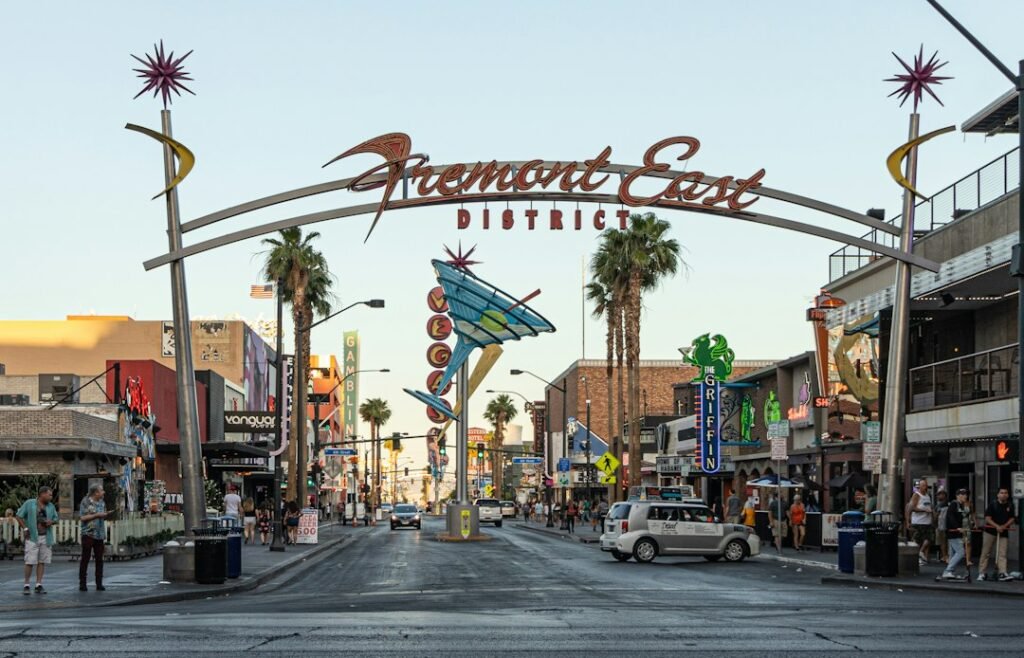
Read our Downtown Las Vegas guide and Arts District guide before deciding whether Downtown fits your trip better than the Strip.
5. Summerlin: best for a calmer, more local Las Vegas stay
Summerlin is not the place to stay if your goal is to walk out of the hotel and immediately be surrounded by Strip attractions. It is, however, a strong base for travelers who want a more residential, polished side of Las Vegas, easy access to west-side dining and shopping, and a better starting point for Red Rock Canyon.
For repeat visitors, couples who do not need casino-hopping every night, or travelers mixing Vegas with outdoor time, Summerlin can feel more relaxed than the tourist corridor.

6. Chinatown and Spring Valley: best for food-first travelers
If dining is one of the main reasons you are coming to Las Vegas, do not assume you need to sleep on the Strip. Chinatown and Spring Valley give you access to one of the city’s deepest concentrations of Asian dining, late-night food, casual restaurants and independently operated spots.
This is a better choice for repeat visitors, travelers with a car, and people who would rather spend on meals than pay a premium simply to have a Strip address. It is less convenient for walking to major tourist attractions, so transportation planning matters.
Use our Las Vegas Chinatown guide, complete Vegas food guide and late-night food guide to build the food side of the trip.
7. Off-Strip resorts: best when the resort itself is the destination
Off-Strip does not automatically mean inconvenient. Some visitors are happiest at a resort where the pool, spa, restaurants, casino and room are the main event. If you only plan one or two Strip nights, paying for a prime Strip location every night may not be necessary.
The tradeoff is transportation. Before booking, estimate how many times you expect to travel to the Strip or Downtown. A lower nightly room rate can lose some of its advantage if you end up using rideshare several times every day.
Best area by traveler type
First-time visitors
Start with Center Strip unless you already know your itinerary is concentrated elsewhere. The convenience is hard to beat on a short first trip.
Couples
Center Strip and North Strip are strong for luxury dining, shows, cocktail bars and resort experiences. For a quieter escape, consider Summerlin or a resort-style off-Strip stay.
Families
Choose based on the attractions you actually plan to visit, pool quality, room layout and transportation needs—not simply whether a hotel markets itself as “family friendly.” Our Las Vegas With Kids guide can help build the rest of the itinerary.
Nightlife-focused trips
Stay near the venues you are most likely to use. Center and North Strip usually provide the easiest access to major nightlife clusters. Avoid saving a small amount on the room if it means adding late-night transportation every night.
Budget travelers
Compare the total cost: room rate, resort fee, taxes, parking if relevant and expected transportation. Downtown and selected off-Strip properties can be compelling, but the cheapest advertised room is not always the cheapest trip.
Travelers without a car
Prioritize walkability and transit. The Las Vegas Monorail connects MGM Grand through the east side of the Strip to SAHARA, but it does not serve Downtown. Downtown itself is more compact once you are there.
Do not choose a hotel by room price alone
In Las Vegas, location has a real cost. A room that is $30 cheaper per night can become a worse value if it adds several rideshare trips, long walks or wasted time every day.
When comparing hotels, look at:
- All-in nightly price: room, resort fee and taxes.
- Distance to your anchor activities: shows, stadiums, restaurants, conferences or nightlife.
- Transportation: walking, Monorail, bus, rental car, parking or rideshare.
- Pool and resort amenities: especially if you expect to spend significant daytime hours at the property.
- Room configuration: important for families and groups.
- Food access: both inside the resort and within a practical distance.
A simple way to decide in 5 minutes
- Write down the three places you care about most on the trip.
- Put them on a map before looking at hotel prices.
- Choose the area closest to the majority of those plans.
- Compare three to five hotels in that area using the all-in price.
- Only choose a farther hotel if the savings or resort experience is worth the extra transportation.
That approach works better than starting with a giant list of hotels and trying to decide which one is “best.”
Our bottom line
For most first-time visitors, Center Strip remains the easiest place to start. Choose South Strip if sports or arena events anchor the trip, North Strip if Sphere and luxury resorts are the focus, Downtown if you want Fremont and old-school Vegas, and off-Strip neighborhoods when food, local experiences, outdoors or a resort-first stay matter more than walking to iconic Strip attractions.
Once you have chosen your base, build the rest of the trip with our Best Things to Do in Las Vegas, Where to Eat in Las Vegas, Best Free Things to Do and Things to Do in Las Vegas at Night guides.
Planning references
For current transportation and destination information, check the official Visit Las Vegas maps and transportation guide and the Las Vegas Monorail route map. Hotel policies, fees and amenities can change, so confirm the final all-in price and current property details directly before booking.