Car-Free Las Vegas: A 3-Day Walk, Bus, and Rideshare Itinerary
A practical, car-free 3-day Las Vegas itinerary: airport transfers, Deuce bus and Monorail routes, Downtown Loop, walkable days, stadium plans and accessibility.
Can you actually enjoy Las Vegas for three days without renting a car? Yes—provided you choose a sensible hotel base, avoid zigzagging across the valley and understand which transit options go where. The goal isn’t to prove you can walk everywhere. It’s to have a better trip with fewer wasted journeys, uncomfortable walks and surprise rideshare bills.
Our separate guide, Las Vegas Without a Rental Car: A Smarter Way to Plan Your Trip, compares whether renting is worthwhile for different trips. This article has a different job: it gives you a step-by-step, car-free long-weekend itinerary, the current official bus and Monorail options, realistic airport-arrival choices, and alternatives for travelers with limited mobility, children, or a major event on their schedule.
It’s best suited to a trip built around the Strip and Downtown. If several priorities are far outside the resort corridor—say, a full day exploring multiple neighborhoods or independent nature destinations—you may need a vehicle, tour, or separately arranged transport. Trying to force every activity into a car-free plan can be more expensive and exhausting than choosing differently.
The simple 3-day itinerary, at a glance
| Day | Your zone | What you’ll do | How to get around |
|---|---|---|---|
| Day 1 | Central Strip | Walk between a small cluster of resorts, dine nearby, then attend a show or enjoy the lights. | Mostly walk; optional Monorail or a short taxi/rideshare. |
| Day 2 | Downtown + Arts District | Explore downtown sights, a local meal and the Arts District; avoid multiple cross-city round trips. | Deuce to/from Strip; free Downtown Loop if operating and useful. |
| Day 3 | Choose ONE anchor | Event at Allegiant/T-Mobile/Sphere, a museum, a pool day, or another neighborhood. | Plan the venue-specific ride/transit and your post-event exit. |
Core planning principle: Choose one primary area each day. A “free” attraction stops being a bargain if reaching it consumes two extra transport legs and an hour of vacation time.
Before you leave: choose a hotel that makes this itinerary possible
A hotel with good walkability can be worth more than a cheaper room on the opposite side of town. For this itinerary, look for a central Strip base if your priorities are major resort attractions and shows. A Downtown base works well if live music, small businesses and Fremont Street are the main draws, but expect a longer ride on the day you visit the Strip.
Use your real attractions as pins on a map, not just the hotel name. Check the entire walk from the lobby to the next destination: some resorts have long internal corridors, elevated crossings, escalators or detours. A hotel that appears adjacent to a show venue may still involve a lengthy walk. If mobility is a concern, call ahead and ask for the recommended accessible entrance and realistic transfer distances.
For a neighborhood-by-neighborhood hotel decision, see our Where to Stay in Las Vegas guide. Our First-Time Las Vegas guide helps you plan the rest of your trip without making every activity an expensive “must-see.”
Landing at Harry Reid International Airport without a car
First, check which terminal your airline actually uses. Harry Reid International Airport has designated taxi and rideshare pickup areas; not every service collects passengers from the same curb. The official taxi and rideshare overview lays out the options:
- Terminal 1 rideshare: Follow airport signs to Level 2 of the parking garage. Don’t call the car to the general baggage-claim curb.
- Terminal 3 rideshare: Follow signs to the Valet Level of the parking garage. You may need to walk through the garage rather than step directly outside arrivals.
- Taxis: Use official taxi ranks located outside baggage claim at each terminal. Depending on your destination, a licensed taxi may compare favorably with rideshare surge pricing.
- Public bus: The airport’s current public-bus instructions identify an RTC stop at Terminal 1 on Level Zero. The airport currently lists Route 108 and the Red Line (formerly Route 109). Passengers arriving at Terminal 3 should follow the airport’s current directions for reaching the Terminal 1 bus stop; check for changes before travel.
Using a bus from the airport can save money, but only if the route and transfers make sense with your luggage and hotel address. Don’t assume it is a single direct ride to your chosen casino. Check your actual connection with the RTC live schedules and maps before deciding. For a family with several suitcases or an exhausted late-night arrival, a direct taxi or rideshare may be worth the difference.
Safety note: Check the vehicle’s make, model and license plate against the rideshare app and confirm the driver identity before getting in. Reject unofficial solicitations in the terminal.
Which transport option should you use—and when?
Las Vegas has multiple useful ways to get around, but they are not interchangeable. The Deuce connects the Strip and Downtown; the Monorail serves a specific east-side resort corridor; the Downtown Loop helps with short Downtown connections; rideshare and taxis fill gaps between them. Choose based on the two exact points of your trip, not the name of the service.
The Deuce: the main Strip–Downtown bus
The RTC’s Deuce schedule and map serves major points along Las Vegas Boulevard, including the Strip and Downtown. The official route map lists well-known stops such as Fremont Street Experience, the Arts District, major resorts and points farther south. The published route operates 24/7, but traffic, queues, temporary detours and event closures can still create long waits.
As listed on the RTC’s current visitor fare page, regular Strip and All Access fares are:
- $4 for one ride.
- $6 for a two-hour pass.
- $8 for a 24-hour pass.
- $20 for a three-day pass.
These are published fares at the time of writing, not guaranteed future prices. Passes have use conditions; eligibility for discounts varies. The RTC offers mobile and other payment options. The Deuce is ideal for a budget-minded Downtown visit, but it isn’t always the fastest way to cover a short distance because of stops, demand and traffic. If your plan is one short trip each way, compare the fare you would actually pay rather than automatically buying the longest pass.
Las Vegas Monorail: helpful along one side of the Strip
The official Las Vegas Monorail map lists seven stations between MGM Grand and SAHARA Las Vegas, including Horseshoe/Paris, Flamingo/Caesars Palace, Harrah’s/The LINQ, Westgate and the Las Vegas Convention Center. It can be useful if your hotel, convention or show is close to a station. But station entrances can be deep within resort properties, so calculate the walk to and from the platform as well.
The Monorail does not take you to the airport or Downtown Fremont Street. Don’t buy a pass expecting it to serve those destinations. Operating hours vary by day and can be affected by events or maintenance, so check the official site just before your trip.
Downtown Loop: free but limited to operating hours
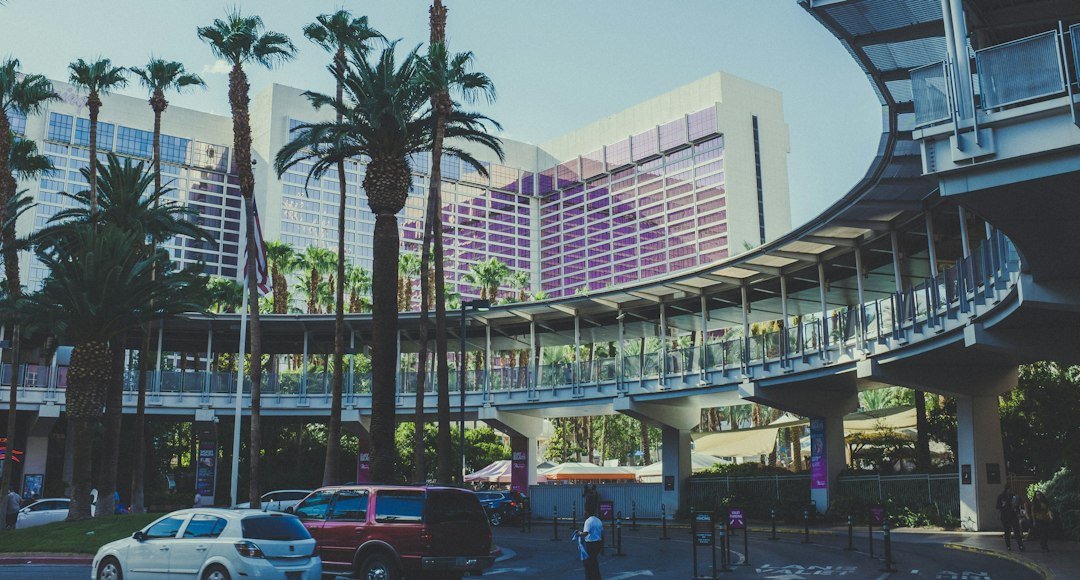
The City of Las Vegas Downtown Loop shuttle is free and connects locations such as Fremont Street, the Arts District, Mob Museum and nearby Downtown stops. As currently posted, its standard service operates Sunday–Thursday 11 a.m.–6 p.m. and Friday–Saturday 3–10 p.m., with changes or special routes possible. That makes it a useful daytime or early evening link, not a safe assumption for every late-night return.
The same city page explains where to switch between the Deuce and Downtown Loop. Confirm the current pickup location before going: construction can relocate stops.
Rideshare and taxis: buy convenience strategically
Point-to-point transport is useful for late-night returns, severe heat, travelers with heavy bags, or an attraction outside practical walking and transit reach. Check the app’s current pickup location and price before committing. Resort pickup zones are often designated and may not be directly outside the lobby. For a game or concert, look at the post-event pickup route before you arrive; the easiest place to be dropped off isn’t necessarily the easiest place to leave.
Day 1: the central Strip without exhausting yourself
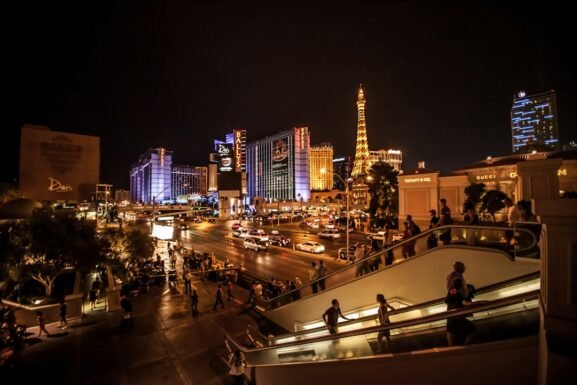
Morning / arrival: Get to your hotel, leave luggage as permitted, then choose a modest walk around one cluster of nearby resorts. A central Strip base can help you spend your first hours enjoying the atmosphere rather than arranging repeated rides. Allow yourself time to learn the hotel’s exits and which pedestrian bridges reach surrounding properties.
Afternoon: Choose a complimentary sightseeing stop, a paid attraction you actually care about, or a relaxed meal. Don’t make a rigid schedule built around visiting every casino from one end of the Strip to the other. The temptation to “just walk to the next hotel” adds up; the Las Vegas resort corridor is larger than a casual map glance suggests. See our 48-hour Las Vegas itinerary for ideas you can swap into this structure.
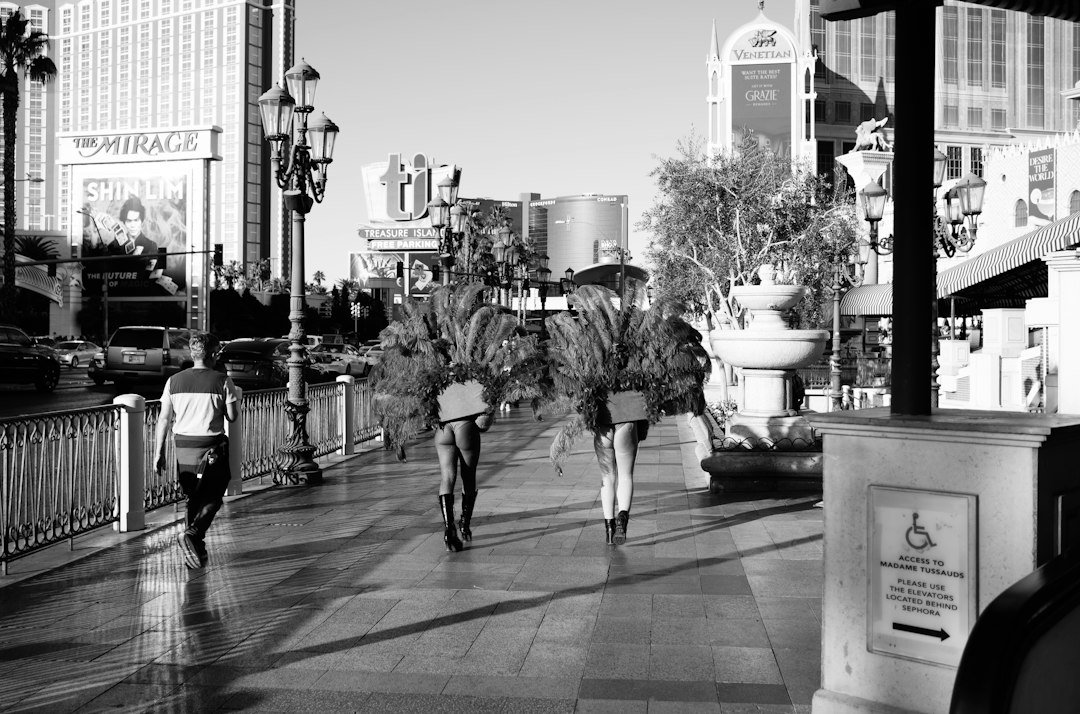
Evening: Pick one show, dinner or nighttime view near your base. Pairing activities on the same end of the Strip means fewer rides and less uncertainty at the end of the night. If you want to explore after dark, start with our Las Vegas after-dark guide. Confirm the venue’s admission rules, start time and walking distance from your hotel; a ticket for 8 p.m. does not mean arriving at 7:59 p.m. is a sensible plan.
How to travel: Walk when the actual route is comfortable; use the Monorail if station geography works; use a direct ride instead of forcing a long outdoor walk during dangerous heat or late at night. Carry water, respect weather alerts, and prioritize well-marked crossings rather than attempting unsafe street crossings.
Day 2: Downtown, Fremont Street and the Arts District
Morning: Start with a realistic breakfast and take the Deuce or direct ride to Downtown. Going this direction early avoids crossing back and forth between the Strip and Downtown all day. Explore daytime Downtown attractions at a relaxed pace, checking hours because museums, small galleries and shops do not all operate on a 24-hour resort schedule.
Midday: Visit an attraction that genuinely interests you, such as the Mob Museum, or use this time for a local meal. Then decide whether to explore the Arts District—a different atmosphere with independently run places—or stay in the Fremont Street area. Both can be rewarding, but they aren’t the same block. Our Downtown Las Vegas guide has a neighborhood overview to help you make the choice.
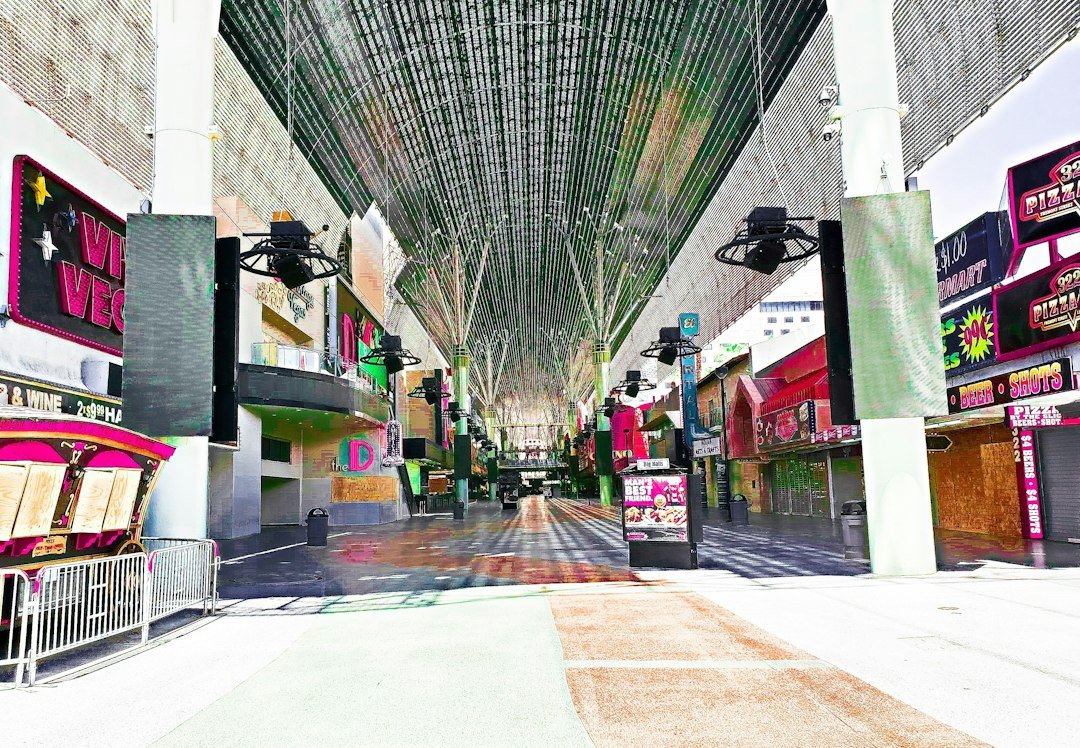
Afternoon: When the city’s Downtown Loop is operating, it can reduce walking between some attractions. The Deuce can also reach portions of Downtown and the Arts District corridor, but confirm stop directions and service disruptions. If it’s very hot, windy or you have accessibility needs, don’t hesitate to budget for a short direct ride.
Evening: If you want to experience Fremont Street’s nighttime energy, consider finishing the day Downtown rather than returning to the Strip and coming back yet again. Before your last activity, plan the trip to your hotel: check the Deuce stop, estimated travel time and whether a taxi or rideshare offers an easier return. Stay aware of your surroundings and keep to populated, well-lit routes.
How to travel: One journey to Downtown, one localized exploring loop and one trip back is a much cleaner plan than four cross-town rides.
Day 3: choose an event day, a convention day or an easy final day
This is your flexible day. If you have a major event, let the event dictate the geography and transportation rather than treating it as another stop in a packed citywide tour. Otherwise, make the day simpler: a museum, leisure time at your hotel or another neighborhood where you can spend several hours without moving around constantly.
If you’re going to Allegiant Stadium
For Raiders games and selected large events, the official stadium guide identifies a pedestrian route across Hacienda Bridge from the resort corridor. The bridge is closed to vehicles and opened to pedestrians for qualifying event operations; don’t assume identical bridge access for every event. Depending on where you’re staying, taking the Deuce toward the south Strip and walking the officially marked event path may work. The stadium also publishes event-specific accessible pickup and drop-off information.
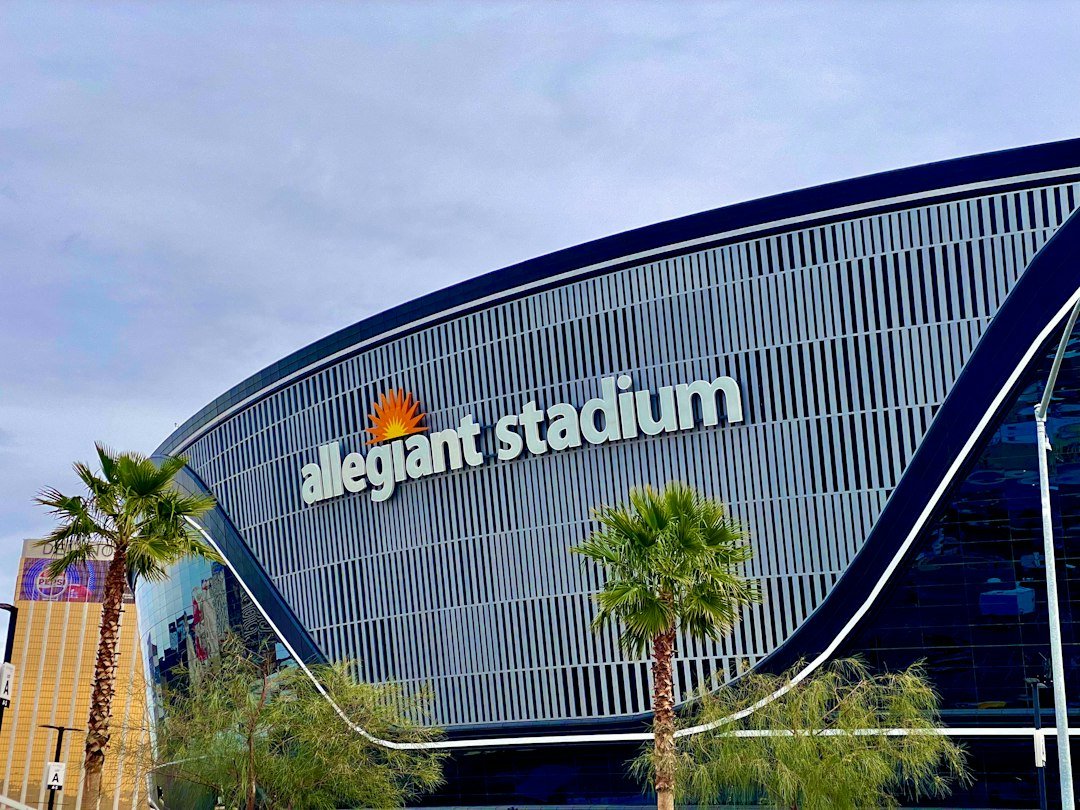
The stadium’s transportation page describes designated rideshare, taxi and accessible lots and how these may change by event. Always plan your exit before entering. For food nearby, see our Allegiant Stadium dining guide.
If you’re attending T-Mobile Arena or a show at Sphere
Different venues mean different walks, transit options and exit points. The T-Mobile Arena neighborhood around Park MGM and New York-New York is not interchangeable with the Sphere’s location farther east. Plan around your actual venue, not the vague statement that the show is “on the Strip.” Our T-Mobile Arena dining guide and Sphere dining guide can help you keep food and entertainment in the same vicinity.
If you don’t have tickets to anything
Choose something relaxed: a favorite restaurant revisit, museum, small shopping area or more exploration near your hotel. A trip without a car works best when you aren’t constantly trying to prove you can reach every corner of Southern Nevada in three days. You can have an excellent vacation without visiting every destination with “Las Vegas” in its mailing address.
Traveling with children, mobility limitations or luggage?
A successful car-free trip is not necessarily a walking-heavy trip. If you’re pushing a stroller, use a wheelchair, travel with an older family member, or have medical or mobility constraints, plan the hotel, stop-to-stop transitions and entryways with more care than a general online map provides.
The RTC says its fixed-route buses have lifts, ramps or kneeling devices; see the official RTC accessibility FAQ. Its ADA paratransit program has eligibility and reservation rules, including specific arrangements for visitors: don’t assume it is an on-demand taxi available without prior qualification. The RTC paratransit rider guide explains the distinction. Confirm accessibility at the particular hotel and show venue as well.
With a stroller or substantial baggage, a direct airport ride might be the best starting point even if you use public transit later. Calculate your trip based on walking and transfer effort, not only dollars. In summer, plan cooling breaks; year-round, remember that resort elevators, escalators or construction may change the route you expected.
A realistic transport budget: what people forget
Don’t judge a car-free plan only by the cost of a bus pass. Write down every leg that isn’t genuinely walkable: arrival from the airport, a Downtown day, a specific event, a late-night return and departure to the airport. Account for your group size and whether splitting a car ride makes more sense than several separate transit fares.
For example, a $20 three-day RTC visitor pass may work well for one traveler who expects repeated bus trips, while a traveler staying centrally with only two bus rides might not need it. A rideshare might save an hour late at night, but demand-driven pricing is not fixed. Monorail tickets are a separate system; a Deuce pass should not be assumed to cover Monorail rides. Check the actual checkout price, current fare rules and transit service before purchase.
Our hotel-area comparison will often make a bigger difference to the total transportation budget than trying to save a few dollars on one individual ticket.
When a car-free plan stops being the right choice
This itinerary intentionally does not treat all Southern Nevada attractions as convenient without a vehicle. Red Rock Canyon’s Scenic Drive, Mount Charleston, Hoover Dam and outlying communities require deliberate transportation arrangements. For these, compare a one-day car rental, an organized tour, a driver or a pre-arranged service when appropriate. Don’t rely on getting a rideshare pickup from a remote trailhead without verifying service and connectivity, and never improvise transportation in extreme weather.
For Red Rock, read our Red Rock day-trip guide and check the official timed-entry booking page for relevant dates and requirements. A reservation does not supply transportation, and a tour may have different arrangements. Some winter mountain routes can require snow equipment, making a standard rental car unsuitable.
If the trip is mostly about outdoor and scattered off-Strip destinations, acknowledge that a car-free itinerary may not be worth the complexity. The smarter choice isn’t always the same for everyone.
A quick decision guide for your own trip
- Pick your one main base: central Strip or Downtown, based on where the majority of your fixed activities are.
- Choose one anchor area each day: a resort cluster, Downtown or the Arts District, then one special-event neighborhood.
- Identify each non-walkable leg: airport, Downtown transfer, stadium or arena, late-night return.
- Choose the mode based on geography: Deuce for Strip–Downtown, Monorail for its specific eastern corridor, Downtown Loop in operating hours, taxi or rideshare to bridge gaps.
- Leave a backup: event traffic, transit detours, heat, weather and long walks can change the original plan.
- Recheck official details: the service map, terminal pickup signs and the venue’s event-specific travel advice are more reliable than a year-old social-media tip.
Official resources to save before the trip
RTC bus routes and live schedules · RTC current fares · Las Vegas Monorail stops · Free Downtown Loop · Airport rideshare pickup · Airport public bus · Allegiant Stadium event transportation.
Editorial note: This guide prioritizes real transportation logistics and an achievable itinerary, rather than repeating the rental-car cost comparison in our other guide. Bus fares, schedules, airport terminal directions and stadium traffic plans may change; confirm official sources for your dates. The locally sourced photographs are illustrative and are not live service or traffic-condition images. We have not inserted unrelated affiliate links.