
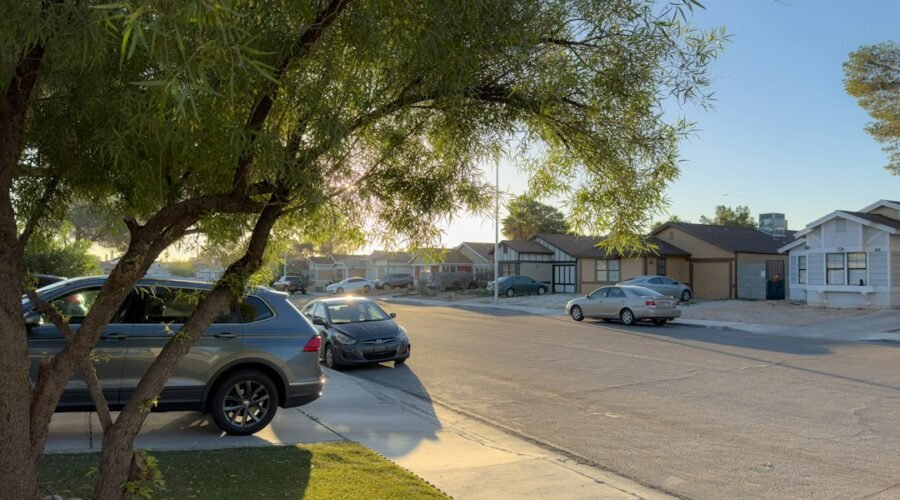
Henderson vs. Summerlin vs. Las Vegas: Where Should You Live?
Henderson vs. Summerlin vs. Las Vegas: compare commute, location, HOA fees, housing costs, schools and real neighborhood fit before choosing where to live.
If you’re moving to Las Vegas, choosing between Henderson, Summerlin and “Las Vegas” sounds like picking three neighborhoods. It isn’t. Henderson is its own city. Summerlin is a master-planned community on the west side of the valley. And “Las Vegas” might mean the incorporated City of Las Vegas, an unincorporated neighborhood with a Las Vegas mailing address, or the broader metro area.
That distinction matters. It affects which maps you should trust, how you compare housing and HOA rules, which roads you’ll use, and what everyday life will actually feel like. The best place isn’t necessarily the most famous or the one with the nicest listing photos. It’s the address that fits your actual routine.
This guide avoids invented price rankings and sweeping “best neighborhood” claims. Instead, we’ll compare the trade-offs you can verify before a move—plus a practical method for choosing among three actual addresses.
First, understand what you’re comparing
| Area | What it is | Best first question |
|---|---|---|
| Henderson | An incorporated city southeast of much of Las Vegas | Which part of Henderson, and how far is it from my routine? |
| Summerlin | A master-planned community on the western edge of the valley, not a separate city | Which village, what fees and rules, and is the home inside the actual Summerlin boundary? |
| Las Vegas / other valley neighborhoods | A wide variety of city and unincorporated areas, from older central blocks to developing suburbs | What are the exact jurisdiction, street and nearby amenities? |
One common mistake is assuming an address that says “Las Vegas, NV” must be inside Las Vegas city limits. Postal addresses do not always match governmental boundaries. For a particular property, use Clark County’s official mapping system and confirm with the appropriate city or county rather than trusting a listing’s neighborhood tag.
Summerlin has an additional wrinkle: its developer defines the master-plan boundary, which does not simply match ZIP codes. The official Summerlin maps and guides include a border map, village information and HOA maps. Treat those maps as boundary references, not independent recommendations to buy a specific property.
Henderson: many different lifestyles within one city
People often picture Henderson as a single suburban experience, but the city covers very different environments. A property near Green Valley can produce a very different daily routine from one near Anthem, the Water Street area or Lake Las Vegas. Some areas feel established, with mature streets and older housing stock; others are newer or oriented around particular master-planned developments.
The practical appeal for many shoppers is choice: different housing styles, access to parks and trails, shopping corridors, and proximity to employment or recreation on the southeast side of the valley. Henderson’s own parks and trails information is a useful starting point for checking actual facilities instead of accepting vague claims about being “close to nature.”
But don’t choose Henderson based on an area-wide impression. The address determines whether an evening grocery run is convenient, whether your route crosses congested corridors, and how far you are from regular appointments. Likewise, a scenic lake-area setting may be attractive but isn’t interchangeable with a centrally located Henderson address.

Consider Henderson if: several properties on your shortlist offer a good combination of housing cost, access to southeast-valley destinations and a daily drive you can comfortably repeat. Compare individual communities rather than assuming the whole city has the same traffic, property age, fees or amenities.
Summerlin: planned villages and west-valley convenience
Summerlin is associated with planned villages, parks, trail connections, retail and proximity to the western desert landscape. Yet it is not a single subdivision—and there is no guarantee that every home marketed as “Summerlin area” lies inside the master-planned community. Before relying on that label, open the Summerlin border and HOA maps and confirm the precise location.
The attraction isn’t only aesthetics. If you regularly use west-valley offices, medical appointments, recreation or shopping, the location can simplify your week. If your job or family commitments pull you to the far southeast every weekday, however, the same home may introduce a longer commute. No amenity replaces time.
Ask the seller or landlord for the complete list of assessments, HOA obligations and restrictions applicable to the actual parcel. Summerlin’s planning structure does not mean every property has identical fees or rules. Confirm landscaping, parking, exterior modifications, rentals and any other restrictions that matter to your household.

Consider Summerlin if: you value the specific west-side location, the neighborhood’s actual amenities and the cost of ownership or tenancy after fees. Red Rock is a strong visual reminder of the western valley’s landscape, but confirm drive times, trail access requirements and seasonal conditions before treating outdoor recreation as a daily convenience.
Las Vegas proper—and other neighborhoods with a Las Vegas address
Las Vegas is not just the Strip. The city and neighboring unincorporated parts of the valley offer housing at very different ages, densities and distances from work, transit or nightlife. Downtown and some central areas may appeal to people seeking a different urban rhythm; other parts of the valley offer quieter residential layouts or newer developments.
This is the widest category and the hardest to summarize honestly. A central home could reduce your commute dramatically—or place you on a route you dislike. A newer outer-valley property could offer more space while increasing transportation time and costs. Condition, block-by-block context, and available services matter more than a generic city label.
Look beyond the listing’s neighborhood name. Walk the block; note lighting, sidewalks, traffic noise, shade, grocery access and the amount of daily driving. If you prefer public transport, check the exact route and stop instead of assuming transit coverage from a map of the metro area. The RTC trip planner lets you investigate practical connections.
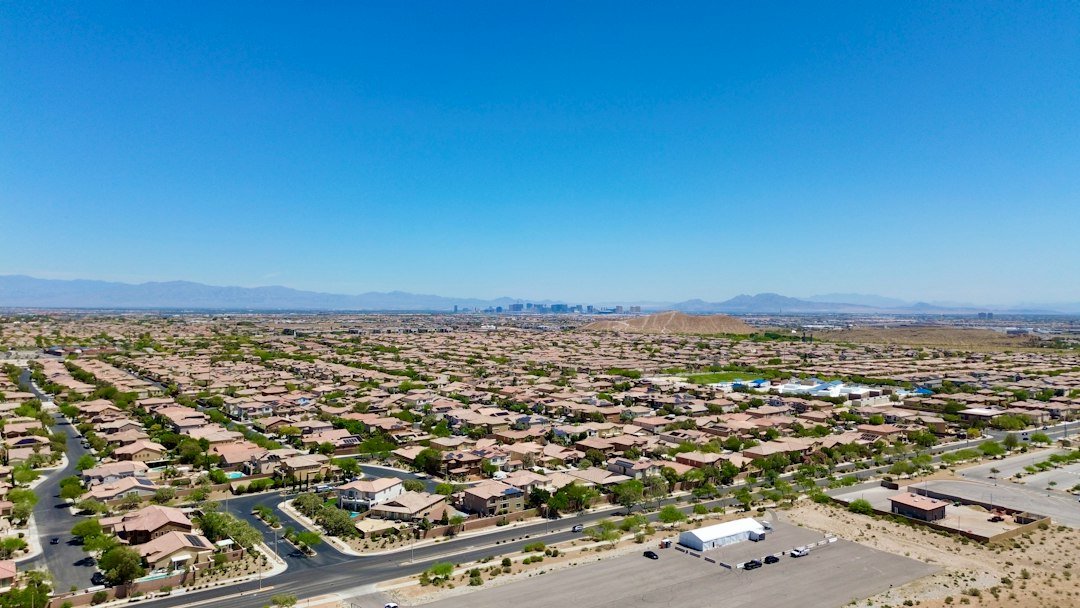
Keep in mind that the Strip is not even located entirely within incorporated Las Vegas; the phrase “close to the Strip” tells you less than the actual drive or transit route to the places you use. A breathtaking skyline photo is not a substitute for a weekday test.
Which place is more affordable? Compare addresses, not stereotypes
It’s tempting to ask, “Is Henderson cheaper than Summerlin?” There isn’t a trustworthy single answer that applies to every home. Price and rent vary by exact location, size, age, property condition, timing, and the kind of housing you’re considering. Even within the same master-planned community, expenses can differ materially.
Instead of relying on a broad neighborhood average, build a side-by-side budget for three addresses with similar household requirements. For renters, include rent, deposits, application charges, utilities, parking, pet costs, renters insurance, internet and recurring fees. For buyers, include purchase and financing costs, taxes, insurance, any HOA or other assessments, repairs, HVAC condition and future maintenance.
Two homes with the same advertised monthly payment can have a surprisingly different real cost once those lines are included. In a desert climate, the home’s insulation, window exposure and cooling-system efficiency deserve particular attention. Ask for historical usage where available rather than assuming a friend or neighbor’s electricity bill will predict yours.
For purchasers, look up the Clark County Assessor’s property record and confirm assessments and applicable tax information with the relevant authorities. Public parcel data is a reference, not a substitute for title, HOA documents, a professional inspection or lender disclosures.
The commute test that changes people’s minds
Distance on a map is a weak predictor of quality of life. If you drive to work five days a week, a little extra time in each direction adds up. A home that feels wonderfully peaceful on Saturday may be less convenient on a weekday when you’re coordinating work, errands and school pickup.
Here’s a useful exercise. Pick three real addresses—perhaps one in Henderson, one in Summerlin and one elsewhere in the valley. At the time you normally commute, test routes to your workplace and regular destinations. Repeat the return trip. Include a grocery stop, a healthcare appointment location and the airport if you fly frequently.
Don’t compare only the best-case drive. Consider busy evenings, event traffic and construction. If transit matters, review route frequency and total door-to-door time; a nearby bus stop alone does not mean the service will fit your schedule.
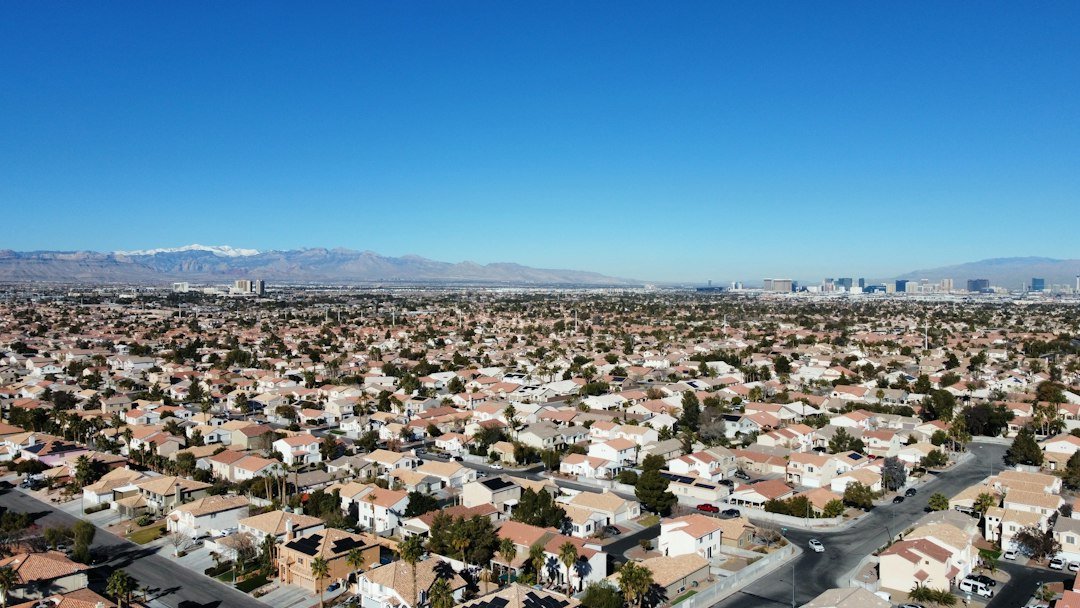
If the added drive is 20 minutes each way on five workdays, that is more than three hours each week. You don’t need a complicated model to decide whether a cheaper or larger home is worth that trade-off—you need a realistic weekly calendar.
Schools, childcare and family routines: verify by street address
School assignment is an address-specific question, not a citywide reputation contest. Clark County School District provides an official zoning and school lookup. Check the current school year, program availability and enrollment requirements directly. New subdivisions and boundary changes can complicate assumptions.
For households with children, the daily logistics may be more important than an area’s reputation. How long is drop-off? What is the backup plan if a caregiver is unavailable? How far away are the places your household actually uses? Look for facilities, program details and practical travel times that match your family’s needs rather than making assumptions about people who live in a neighborhood.
If you need ongoing medical care, check actual provider networks and whether offices are accepting appointments at convenient times. A location may appear close on a map but be awkward during your normal travel hours.
How homeowners associations and community rules change the equation
Prospective residents sometimes focus on the presence or absence of an HOA as though that tells the whole story. In reality, the documents matter. A well-maintained community can have rules you dislike, while a home without an HOA can bring different responsibilities. No universal preference wins.
Before purchasing or signing a lease, ask about applicable associations, dues, special assessments, exterior changes, landscaping, parking, pet rules, rental restrictions, community-facility access and who maintains which areas. Some properties may involve multiple layers of rules or assessments. Obtain documents for the specific address and ask clarifying questions before committing.
For buyers considering properties within Summerlin, use the developer’s HOA reference map as a starting point—not a definitive quote for your particular property. For Henderson addresses, the city’s maps can help identify parks and local context, but your seller, association and closing documents should confirm the actual obligations.
Desert living is the common denominator
Regardless of the area, you’ll need to think about summer heat, shade, water, home cooling and outdoor schedules. Sun exposure can affect comfort. A west-facing room and an older AC system deserve attention even when everything else about a house looks perfect. Your priorities may change once you’ve experienced an August afternoon.
Ask whether a property has usable shade, what the outdoor space costs to maintain, whether irrigation works, and who handles landscaping. Don’t assume a big yard is always an advantage in a desert climate; for some residents it is a joy, for others a recurring expense.
Our guide to moving to Las Vegas covers more of these daily realities. And if cooling ever fails, bookmark our AC Not Cooling local-help resource for practical first steps and contractor questions.
A neighborhood scouting trip that actually works
Don’t schedule only back-to-back open houses. Give yourself time to live an ordinary day in each candidate area. Buy groceries, find a pharmacy, locate a park you would use, and try your prospective commute. Then visit again at a different time of day.
- Write down the nonnegotiables: maximum total housing cost, essential accessibility needs, commute tolerance, housing type and regular activities.
- Select three actual addresses: one may be in Henderson, one in Summerlin and one elsewhere, but choose them for fit rather than quotas.
- Run a realistic weekly route: work, errands, appointments, recreation and, when relevant, school and childcare.
- Check property-specific costs: utilities, parking, insurance, dues, assessments and maintenance.
- Verify official information: boundaries, school assignment, local services, property records and any applicable association rules.
- Return during another time window: a daytime visit cannot tell you everything about evening noise, traffic or access.
- Sleep on it: compare your notes rather than choosing based on the most impressive model home.
If you’re making a dedicated scouting visit, our where-to-stay guide can help you select a practical base. A short visit spent doing everyday errands may be worth more than another resort tour.
So, Henderson, Summerlin or Las Vegas: which should you choose?
Choose Henderson when a specific address there gives you the right combination of home, budget, facilities and commute—especially if your routine aligns with its part of the valley. Choose Summerlin when the western location, actual village amenities and documented fees make sense for your lifestyle. Choose another Las Vegas Valley neighborhood when its precise streets and services deliver a better practical fit, whether closer to Downtown, work, transit or another set of everyday destinations.
The best answer is rarely “this city wins.” It’s: this home, at this total cost, for these everyday trips, works for us. Once you frame the decision that way, the noise around neighborhood rankings gets a lot quieter.
Continue planning your move
Start with Moving to Las Vegas: What Nobody Tells You Before You Arrive. For exploring areas beyond the Strip, see our Downtown guide and Red Rock escape. For questions about repairs, services and everyday emergencies, explore local home-repair help.
Useful official planning tools: Henderson parks and trails · Summerlin maps and boundaries · CCSD school zoning · RTC route planner · Clark County parcel and area maps.
Editorial note: Housing costs, neighborhood development, school boundaries, community rules and public services change. Verify address-specific details before signing a lease or making a purchase. Photographs are illustrative; only the image captioned Lake Las Vegas identifies a specific neighborhood. No unrelated affiliate offer has been added to this relocation guide.